

| Article Summary SOC 2 Type 2 audit has become a standard expectation in enterprise vendor reviews and procurement assessments in 2026. Buyers increasingly require proof that controls operate effectively over time, not just at a single point. Stronger audit scrutiny, changing security expectations, and ongoing monitoring requirements are raising the importance of continuous compliance readiness.A structured SOC 2 Type 2 audit helps organizations strengthen trust, improve operational discipline, and accelerate enterprise sales opportunities. |
A SOC 2 Type 2 audit has become a business expectation in 2026, especially for companies that handle customer data or serve enterprise clients. Buyers no longer want proof that controls exist; they want proof that they work. They want evidence that security, access management, monitoring, and compliance processes operate consistently over time.
Enterprise procurement reviews have also become more rigorous as organizations face growing pressure around vendor risk, cloud security, and third-party oversight. A current SOC 2 Type 2 report helps businesses demonstrate operational maturity, strengthen customer trust, and reduce friction during security reviews.
In this blog, we’ll discuss why a SOC 2 Type 2 audit is important in 2026, what buyers now expect during compliance reviews, and how organizations can prepare for stronger audit and security requirements.
What Is a SOC 2 Type 2 Audit in 2026?
| A SOC 2 Type 2 audit evaluates whether your organization’s security and compliance controls operated effectively over a defined review period. The SOC 2 report focuses on how those controls perform in day-to-day operations. |
The audit is based on the American Institute of Certified Public Accountants (AICPA) Trust Services Criteria, which include:
- Security
- Availability
- Processing Integrity
- Confidentiality
- Privacy
Security is required for every SOC 2 engagement, while the remaining criteria are included based on the services provided and the types of data managed.
During the audit, a SOC 2 auditor examines evidence demonstrating how controls function in practice. This includes activities such as access management, change management, system monitoring, incident response, risk management, and vendor oversight. Rather than reviewing controls at a single point in time, auditors evaluate whether they operated consistently throughout the reporting period.
This distinction is what separates SOC 2 Type 2 from SOC 2 Type 1. A Type 1 audit evaluates whether controls are appropriately designed at a specific point in time. A Type 2 audit evaluates both the design of those controls and their effectiveness over time.
Many auditors describe Type 1 as a snapshot and Type 2 as evidence of how security controls function in day-to-day operations. This difference has become increasingly important as customers seek greater assurance that organizations can maintain security consistently rather than simply document it.
As vendor ecosystems become more complex and cyber risks continue to increase, buyers are looking beyond policies and procedures. They want evidence that controls are integrated into operational workflows and functioning as intended throughout the year. A SOC 2 Type 2 report provides that assurance.
Why Enterprise Customers Care About SOC 2 Type 2 In 2026
Organizations increasingly depend on cloud platforms, software providers, managed services, and third-party vendors to support critical business operations. As a result, vendor risk management programs have become more rigorous and structured.
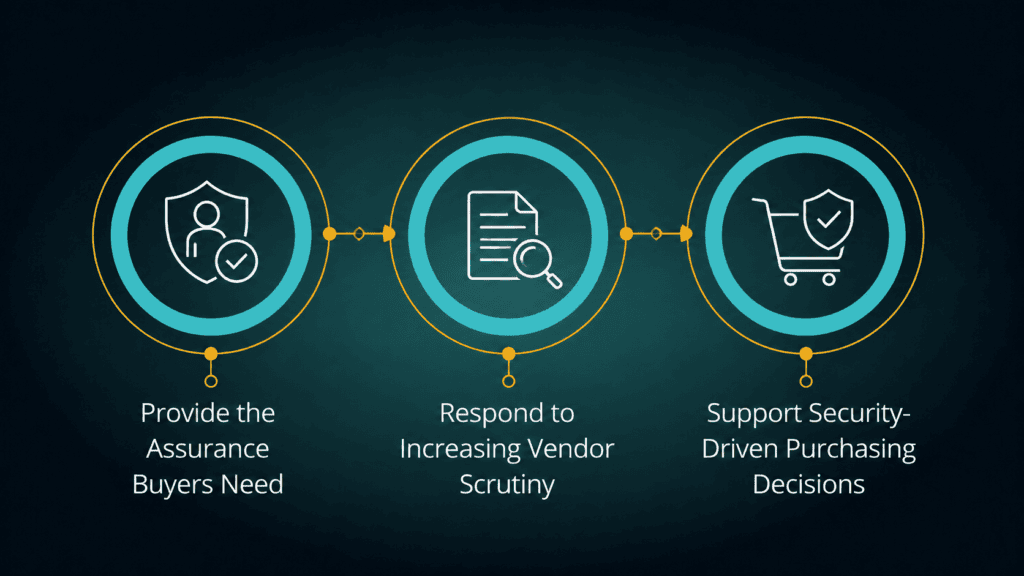
Provide the Assurance Buyers Need
Customers want confidence that their vendors can protect sensitive information and manage operational risks effectively. Security policies and internal documentation may provide some assurance, but they do not demonstrate whether controls are functioning consistently in practice.
A SOC 2 Type 2 report provides independent validation that controls have been tested over time. This gives buyers greater confidence when evaluating prospective vendors and helps reduce uncertainty during procurement reviews.
Customers increasingly expect evidence that organizations can:
- Manage access securely
- Monitor systems effectively
- Respond to incidents appropriately
- Maintain operational accountability
- Protect sensitive information consistently
A Type 2 report helps answer these questions through third-party assessment rather than self-attestation.
Respond to Increasing Vendor Scrutiny
Modern organizations operate within highly interconnected environments. A security incident involving one vendor can affect multiple customers, partners, and stakeholders.
As a result, third-party risk management has become a major focus for procurement and security teams. Vendor assessments now involve deeper reviews of operational practices, security controls, governance structures, and compliance programs.
Organizations without a current SOC 2 Type 2 report often face additional requests for documentation, longer security reviews, and greater scrutiny during onboarding.
Companies that maintain a current report are often better positioned to respond to customer due diligence requirements because they can provide structured evidence demonstrating how controls operate over time.
Support Security-Driven Purchasing Decisions
Security has changed into a business requirement rather than simply an IT concern. Procurement teams frequently involve security, compliance, legal, and risk management stakeholders in purchasing decisions.
When evaluating vendors, these stakeholders want assurance that the organization can protect customer data and maintain reliable operations.
As a result, security assurance often becomes a competitive differentiator. Organizations that can demonstrate operational maturity and ongoing control effectiveness may find it easier to build trust during procurement discussions.
This trend continues to grow in 2026 as customers place greater emphasis on transparency, accountability, and long-term risk management.
What Business Value Does A SOC 2 Type 2 Audit Create?
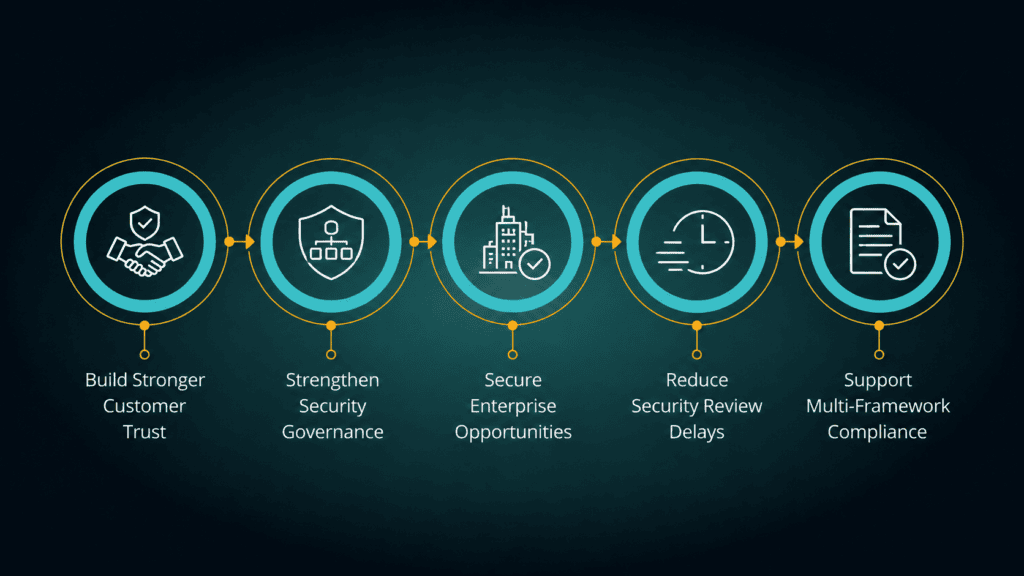
A SOC 2 Type 2 audit delivers value beyond compliance by helping organizations strengthen trust, improve operations, and support long-term business growth.
Build Stronger Customer Trust
Trust is a major factor in vendor relationships. A SOC 2 Type 2 report provides independent validation that your controls operate effectively over time, helping customers and partners feel more confident about sharing sensitive information with your organization.
This assurance can support customer retention, contract renewals, partnership opportunities, and long-term business growth. As organizations become more selective about who they work with, demonstrated accountability becomes increasingly valuable.
Strengthen Security Governance
Preparing for a SOC 2 Type 2 audit helps organizations formalize processes, clarify responsibilities, and improve accountability.
Access management, incident response, risk assessments, change management, monitoring activities, and vendor oversight often become more structured during the compliance process. These improvements strengthen governance and provide leadership with greater visibility into how controls operate across the organization.
Secure Enterprise Opportunities
Many enterprise organizations require evidence of security maturity before approving new vendors.
Organizations without a SOC 2 Type 2 report may encounter delays during procurement reviews or struggle to meet onboarding requirements. Some opportunities may never progress beyond the security review stage.
A current SOC 2 Type 2 report demonstrates a commitment to security, compliance, and operational accountability. This can improve an organization’s ability to compete for larger contracts and build relationships with enterprise customers that maintain strict vendor requirements.
Reduce Security Review Delays
Security questionnaires and vendor assessments can consume considerable time and resources.
Organizations are frequently asked to provide information regarding policies, controls, monitoring practices, risk management processes, and incident response capabilities. Responding to these requests repeatedly creates administrative burdens for security, IT, and operational teams.
A SOC 2 Type 2 report provides a centralized source of assurance that customers can review during due diligence. This helps reduce repetitive requests and streamlines procurement discussions.
Support Multi-Framework Compliance
Many organizations pursue additional frameworks as their compliance programs mature.
Frameworks such as ISO 27001, ISO 27701, and ISO 42001 share common principles involving governance, documentation, risk management, policy oversight, and evidence collection.
The processes established during a SOC 2 Type 2 engagement often support these future initiatives. Rather than treating compliance as a series of isolated projects, organizations can build an integrated compliance program that supports multiple certifications and frameworks over time.
Why SOC 2 Type 2 Matters More In 2026
SOC 2 Type 2 has conventionally been viewed as a certification milestone. Organizations would complete an audit, receive a report, and move on to other priorities. That approach no longer reflects how modern organizations manage risk or build trust.
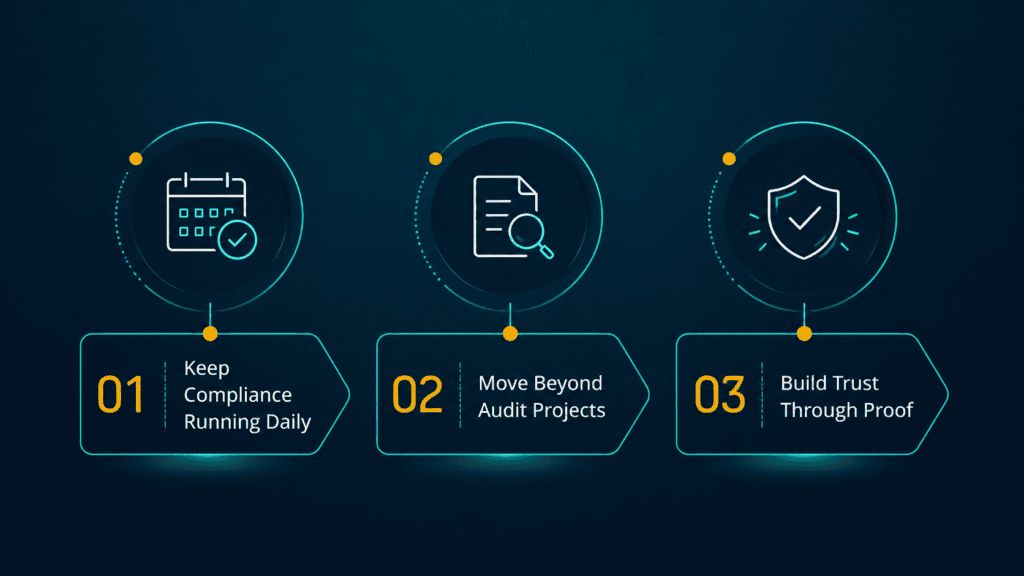
Keep Compliance Running Daily
Threat environments change constantly. Technology updates, vendor ecosystems expand, and business operations become more interconnected.
As a result, customers increasingly care about how controls operate today rather than how they performed during a previous audit cycle.
This shift has accelerated the movement toward continuous compliance. Organizations are focusing less on preparing for audits and more on maintaining controls consistently throughout the year.
SOC 2 Type 2 supports this approach by evaluating performance over time. It encourages organizations to embed controls directly into daily operations rather than treating compliance as a separate activity.
More mature organizations increasingly ask: “Are our controls working today?” rather than: “Are we ready for the audit?”
Move Beyond Audit Projects
Many organizations that treat SOC 2 as a one-time initiative encounter recurring challenges, including:
- Gaps between policy and execution
- Inconsistent evidence collection
- Unclear ownership of controls
- Increased pressure before audit periods
Organizations with more mature compliance programs take a different approach. They integrate controls directly into operational processes, establish clear ownership, standardize evidence collection, and maintain ongoing oversight throughout the year.
This reduces audit fatigue while improving overall security performance.
Build Trust Through Proof
Customers increasingly expect organizations to demonstrate security maturity through independent validation.
Trust is no longer built solely through marketing messages, security statements, or internal policies. Buyers want evidence that controls are operating effectively and that security commitments are supported by real operational practices.
A SOC 2 Type 2 report helps provide this assurance.
Organizations that maintain ongoing compliance often benefit from:
- Stronger customer confidence
- Faster responses to security assessments
- Shorter procurement cycles
- Reduced operational risk
- More sustainable security programs
For many organizations in 2026, SOC 2 Type 2 is no longer viewed as a differentiator. It is becoming the baseline expectation for doing business with enterprise customers.
What Organizations Should Do Next
Organizations preparing for a SOC 2 Type 2 audit in 2026 should focus on building a sustainable compliance program rather than treating certification as a one-time project. Key priorities include:
- Assess current security controls and identify compliance gaps.
- Integrate security controls into everyday operational workflows.
- Establish clear ownership and accountability for controls.
- Standardize evidence collection and documentation processes.
- Monitor controls continuously throughout the year.
- Validate audit readiness before engaging in a formal audit.
- Work with an experienced SOC 2 auditor or compliance partner to support ongoing compliance efforts.
As security expectations continue to change, organizations that prioritize continuous compliance will be better positioned to build trust, support growth, and meet enterprise customer requirements.
Create A More Defensible SOC 2 Compliance Program
A successful SOC 2 Type 2 audit requires more than documented policies. Organizations need structured controls, continuous evidence management, and operational consistency that can withstand growing enterprise scrutiny in 2026. Strong preparation helps reduce audit delays, improve customer trust, and support long-term compliance maturity.
Decrypt Compliance helps startups and growing businesses simplify SOC 2 readiness, audit preparation, and multi-framework compliance through a structured and efficient approach.
Contact Us Today if your organization is preparing for a SOC 2 Type 2 audit or planning future compliance initiatives.
FAQs
1. Can startups pursue a SOC 2 Type 2 audit?
Yes. Many startups pursue a SOC 2 Type 2 audit early when enterprise customers begin requesting security assurance during procurement reviews. Early preparation can also help growing companies establish stronger operational processes before scaling further.
2. Does a SOC 2 Type 2 report apply internationally?
Yes. Although SOC 2 originated in the United States, many international companies use SOC 2 reports to demonstrate security and operational accountability when working with global customers, vendors, and enterprise partners.
3. Can a company fail a SOC 2 Type 2 audit?
A SOC 2 Type 2 report may identify exceptions, control gaps, or operational weaknesses if controls are not effective during the review period. Strong preparation, continuous monitoring, and organized evidence management help reduce these issues before testing begins.
4. What happens after you receive a SOC 2 Type 2 report?
After certification, organizations should continue to monitor controls, maintain evidence, update policies, and prepare for annual renewal cycles. SOC 2 compliance works best as an ongoing operational process rather than a one-time project.
5. Is SOC 2 Type 2 useful for companies pursuing ISO 27001 later?
Yes. Many operational controls used during a SOC 2 Type 2 audit overlap with ISO 27001 requirements, including access management, risk assessment, monitoring, and policy governance. This can help organizations build a stronger foundation for future multi-framework compliance efforts.
References:
https://www.calian.com/digital-cyber/blogs/soc-2-type-ii-continuous-compliance-2026